


Table of Contents
Melamine dinnerware is widely used in homes, restaurants, and catering services because it is lightweight, durable, and looks similar to ceramic. However, many users are still concerned about whether melamine dinnerware affects food safety when exposed to high heat conditions. Since it is made from resin-based plastic material, its heat resistance is limited compared to ceramic or glass. Understanding its behavior under temperature stress is important for safe daily use.
Material Characteristics and Heat Resistance Limits
The safety performance of melamine dinnerware under high heat conditions is mainly determined by its material properties.
- Thermosetting resin structure: Melamine dinnerware is formed through high-pressure molding of melamine-formaldehyde resin. Once hardened, it becomes strong and scratch-resistant, but it still has temperature limitations.
- Safe temperature range: In general, melamine products are stable when used below approximately 70°C–100°C. Within this range, it performs well for serving hot meals without significant risk.
- Structural degradation at high heat: When exposed to temperatures beyond its limit, the material may gradually soften or develop surface micro-damage, which can reduce its stability over time.
These characteristics explain why it is suitable for serving food but not for cooking or reheating.
Food Safety Risks Under High Temperature Conditions
When discussing whether melamine dinnerware affects food safety under high heat conditions, the main concern is chemical migration.
- Formaldehyde release potential: Under extreme heat, especially above recommended limits, small amounts of formaldehyde may be released from melamine dinnerware into food. Although regulatory levels are generally low, repeated exposure may raise health concerns.
- Acidic food interaction: Hot acidic foods such as tomato soup, citrus-based dishes, or vinegar-heavy meals can accelerate chemical migration when combined with high temperatures.
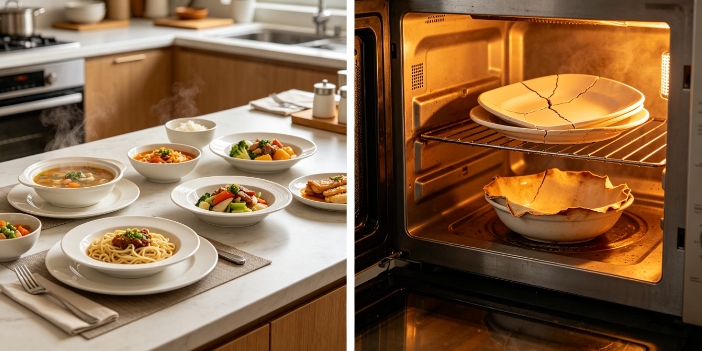
- Microwave and oven misuse: Using melamine dinnerware in microwaves or ovens can cause uneven heating, overheating certain areas, and increase the risk of breakdown and contamination.
These risks are not typically present under normal serving conditions but become more relevant when the material is misused.
Safe Usage Guidelines for Everyday Application
To ensure melamine dinnerware does not create food safety issues under high heat conditions, proper usage is essential.
- Use only for serving, not heating: Melamine dinnerware should not be used for cooking or reheating food in any appliance.
- Avoid microwave and oven exposure: High-frequency or direct heat sources can damage the structure of the material and increase safety risks.
- Let food cool slightly before serving: Allowing boiling food to rest for a short time before placing it into melamine containers helps reduce heat stress.
- Replace damaged products promptly: Cracks, scratches, or worn surfaces can trap bacteria and may increase the likelihood of contamination over time.
Following these simple practices helps maintain both safety and product durability.
Advantages and Limitations in Practical Use
Despite concerns, melamine dinnerware remains a popular choice due to its practical benefits, though it also has limitations.
Advantages:
- Lightweight and easy to carry, especially in food service environments
- Highly resistant to breakage compared to ceramic or glass
- Cost-effective for bulk usage in restaurants and cafeterias
- The colors and designs are rich and diverse, possessing immense aesthetic appeal.
Limitations:
- Lower heat resistance compared to ceramic or stainless steel
- Not suitable for microwave or oven use
- Potential risk of chemical migration under improper high-heat exposure
- Surface wear over time may reduce long-term safety performance
Balancing these pros and cons helps users decide where and how to use melamine dinnerware appropriately.
Conclusion
In summary, whether melamine tableware poses a risk to food safety under high-temperature conditions depends primarily on how it is used. Under normal serving temperatures, it is generally safe, stable, and reliable. However, exposure to excessive heat, such as microwaving, boiling, or prolonged contact with very hot or acidic foods, may increase the risk of material degradation and potential chemical migration. By using it correctly—mainly for serving rather than heating—users can safely enjoy the benefits of melamine dinnerware while minimizing any food safety concerns.
0