
Table of Contents
In modern manufacturing, speed, precision, and reliability are essential to staying competitive. Industries such as cosmetics, pharmaceuticals, personal care, and household chemicals are rapidly scaling production, and choosing an appropriate capping solution is critical. Many manufacturers now rely on automated equipment, including a pump capper, to meet these demands. But is this type of machine truly suitable for high-speed production lines? The answer depends on several factors, including machine design, line integration, torque control, and operational efficiency. Understanding these elements helps businesses make informed decisions when upgrading their packaging systems.
Key Performance Factors in High-Speed Environments
When evaluating whether a pump capper can handle fast-paced production, several aspects are important:
- Capping Speed and Throughput
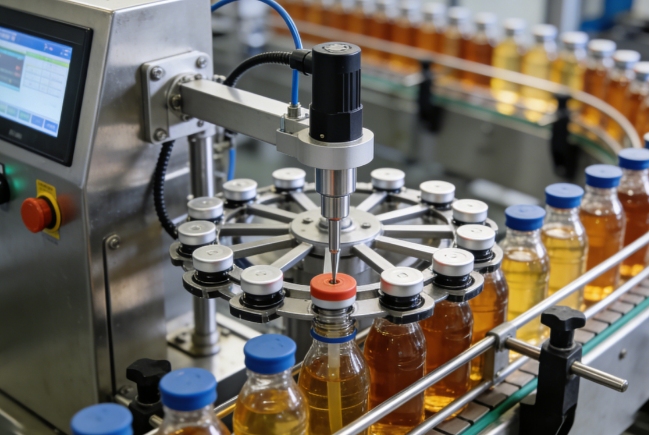
High-speed lines require machines capable of handling hundreds or thousands of units per hour. Many modern cappers feature multi-head or rotary mechanisms to maintain continuous operation and reduce bottlenecks. - Torque Control Accuracy
Consistent torque ensures every pump is securely fastened, preventing leaks or product damage. Precision systems help maintain uniformity across large batches, improving quality consistency. - Line Synchronization
Seamless integration with conveyors and filling machines is crucial. Machines that automatically adjust to line speed changes help minimize downtime and ensure smooth operation.
Advantages of Using a Pump Capper
Adopting a pump capper provides several benefits for high-speed production:
- Enhanced Efficiency
Automation reduces variability caused by manual labor, allowing continuous production with minimal interruptions. - Reduced Labor Dependency
By relying on automated capping, operators can focus on higher-value tasks, improving overall productivity. - Improved Product Consistency
Uniform capping ensures proper sealing, especially for liquid or viscous products prone to leakage. - Scalability
Many high-performance cappers can handle growing production demands, offering flexibility for future expansion.
Challenges When Implementing a Pump Capper
Despite the advantages, some challenges need to be considered:
- Compatibility with Different Pump Designs
Products may require pumps of various sizes, shapes, or materials. Machines must be adaptable to handle these variations efficiently. Using a pump capper that supports multiple pump types can reduce downtime and ensure smooth - Investment and ROI
High-speed equipment involves high upfront costs. Businesses must assess long-term benefits, including labor savings and increased throughput. - Maintenance and Expertise
Sophisticated machinery requires routine maintenance and skilled operators. Proper training ensures consistent performance and reduces downtime.
Features That Enhance High-Speed Suitability
Certain design features improve performance in demanding production lines:
- Servo-Driven Systems
Precise control over movement and torque allows faster and more accurate operation. - Quick Changeover Mechanisms
Tool-less adjustments and modular components enable fast product changeovers, minimizing downtime. - Smart Monitoring and Control
Integrated sensors and digital interfaces help operators track performance and prevent errors before they affect production. - Durable Construction
High-quality machines, including a pump capper, are built for long-term continuous operation, ensuring reliability in high-speed lines.
How to Choose the Right Pump Capper
Selecting the right pump capper requires careful consideration of production requirements:
- Production Volume
Ensure the machine can handle current and projected output without frequent upgrades. - Product Variety
Lines with multiple product types need a flexible system that can handle different pumps efficiently. - Line Integration
Verify compatibility with existing conveyors and filling machines to avoid inefficiencies or costly modifications. - Maintenance Support
Reliable technical support and access to spare parts help maintain long-term performance.
By evaluating these factors, manufacturers can select a pump capper that maximizes efficiency, consistency, and ROI.
Conclusion
A pump capper can be highly suitable for high-speed production lines when properly selected and configured. Its ability to maintain efficiency, ensure consistent product quality, and reduce labor dependency makes it a valuable asset in modern manufacturing. By carefully assessing production demands, product variations, line integration, and maintenance needs, businesses can confidently implement a pump capper that meets both speed and quality requirements.
0