

Table of Contents
Distribution cables play a vital role in electrical systems, ensuring the safe and efficient transmission of electricity to homes, businesses, and industries. These cables are made from various materials, each offering unique properties that suit specific applications. The materials used in distribution cables directly affect the cable’s performance, durability, and overall reliability. In this article, we will explore the different materials commonly used in distribution cables and the benefits they bring to electrical systems.
1. Copper: The Standard for Electrical Conductivity
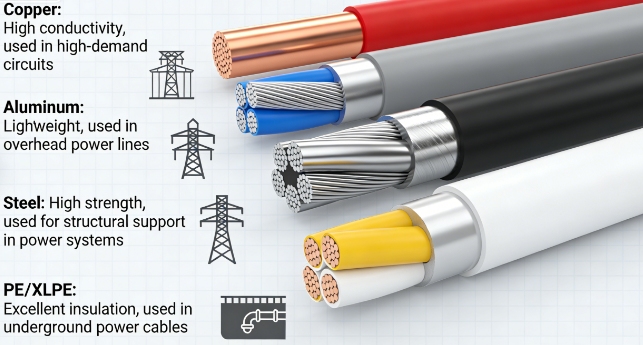
Copper is the most commonly used material for conductors in distribution cables. Known for its excellent electrical conductivity, copper offers low resistance to electrical current, ensuring minimal energy loss during transmission. The benefits of using copper in distribution cables include:
- High Conductivity: Copper has a conductivity of 59 x 10^6 S/m, which makes it one of the best materials for electrical current flow.
- Durability: Copper is resistant to corrosion and has a long lifespan, making it ideal for both residential and industrial applications.
- Flexibility: Copper cables are more flexible compared to other materials, making installation easier in tight spaces and complex environments.
However, copper is relatively expensive, which can increase the overall cost of distribution cables. Despite the cost, its performance and longevity make it a preferred choice in many high-performance electrical systems.
2. Aluminum: A Lightweight and Cost-Effective Alternative
Aluminum is another commonly used material in distribution cables, particularly for high-voltage and long-distance transmission lines. Although aluminum has a lower conductivity compared to copper, it has its own set of benefits:
- Lightweight: Aluminum is significantly lighter than copper, which makes it easier to handle and install, especially in large-scale projects.
- Cost-Effective: Aluminum is less expensive than copper, which makes it a more economical option for power distribution systems, especially for long-distance transmission where weight and cost savings are crucial.
- Resistance to Oxidation: Aluminum naturally forms an oxide layer on its surface, which provides a protective barrier against corrosion, enhancing its longevity in outdoor applications.
However, because of its lower conductivity, aluminum cables tend to have a larger diameter than copper cables to carry the same amount of current, which can affect the overall design of the electrical system.
3. Steel: Reinforcement for Armored Cables
Steel is often used in combination with copper or aluminum to reinforce distribution cables. Steel is particularly useful in armored cables, which are designed to withstand physical damage in harsh environments. The advantages of steel in distribution cables include:
- Mechanical Strength: Steel provides high tensile strength, making it ideal for cables that need to withstand physical stresses such as pulling, bending, or exposure to mechanical impact.
- Protection Against Rodents: In areas where rodents are a problem, steel-reinforced cables are highly effective at preventing damage caused by chewing and other forms of attack.
- Corrosion Resistance: When galvanized, steel can resist rust and corrosion, which is crucial for outdoor and underground installations.
Steel is often used as an outer sheath or armor layer, providing added protection without compromising the electrical conductivity of the inner cables.
4. Polyethylene (PE): Insulation for Durability
Polyethylene (PE) is widely used as an insulating material for distribution cables. PE offers several benefits as an insulating layer in both low-voltage and medium-voltage applications:
- High Dielectric Strength: PE provides excellent insulation properties, helping to prevent electrical leakage and maintain safety in power distribution systems.
- Durability: PE is resistant to chemicals, moisture, and temperature fluctuations, which makes it suitable for outdoor, underground, and industrial installations.
- Flexibility and Ease of Installation: The flexibility of PE insulation makes it easier to install in various environments, especially where cables need to be routed through tight spaces or around obstacles.
PE is commonly used in combination with other materials, such as copper or aluminum conductors, to enhance the overall performance and longevity of distribution cables.
5. Cross-Linked Polyethylene (XLPE): Enhanced Performance for High-Voltage Applications
Cross-linked polyethylene (XLPE) is a more advanced form of polyethylene that is commonly used in high-voltage distribution cables. XLPE provides superior performance under demanding conditions, making it ideal for use in power transmission systems. The benefits of XLPE include:
- Higher Temperature Resistance: XLPE can withstand higher operating temperatures compared to standard PE, making it suitable for high-voltage cables that operate under heavy electrical loads.
- Improved Mechanical Properties: The cross-linking process enhances the mechanical properties of the material, increasing its resistance to physical stress, abrasion, and impact.
- Electrical Insulation: XLPE offers superior electrical insulation properties, reducing the risk of short circuits and electrical failures in high-voltage systems.
Due to its high performance, XLPE is often used in modern electrical grids, substations, and power plants where reliability and efficiency are paramount.
Conclusion
The material choice for distribution cables is key to system reliability, safety, and efficiency. Copper offers excellent conductivity, aluminum is lightweight and cost-effective, while steel reinforces cables for added protection. Insulation materials like PE and XLPE provide durability and safety. When selecting a material, consider factors such as conductivity, strength, cost, and the environment to ensure the best performance.
Understanding these materials helps in selecting the right cable for various applications, ensuring stable and safe electrical systems.
0