



Table of Contents
Anchor systems for ground have significant applications in tunnels, slope stabilization, mining operations, and foundation engineering works. The effectiveness of such systems is not only determined by the steel capacity; it also depends on the homogeneity of material, manufacturing precision, compatibility of connections, protection from corrosion, and proper installation.
For an anchor bolt manufacturer, it becomes important to control these aspects in the process of manufacturing and guarantee that all requirements for the products are met.
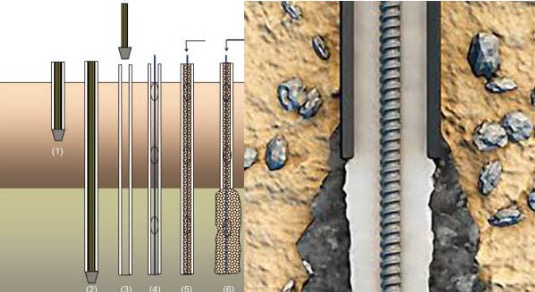
How an Anchor Bolt Manufacturer Maintains Product Quality
Product quality starts from the beginning with well-defined technical specifications and is followed by material preparation, processing, testing, and transportation. Every step assists in controlling the possible defects in anchoring function.
Material Selection and Traceability
Properties of the steel used play a crucial role in defining the performance of the anchoring components. Based on the intended application of these anchoring components, certain levels of tensile strength, yield strength, and ductility have to be achieved.
The choice of material should conform to engineering standards, not product descriptions. Material certificates and traces are used by buyers to ensure that the supplied component conforms to the grade prescribed.
A competent anchor bolt manufacturer will be able to maintain proper material traces, especially for custom work.
Thread Manufacturing Accuracy
The threads serve to link the anchoring bars with the couplers, nuts, bearing plates, among other parts.
There should be a quality inspection for proper thread shape, size, and compatibility with the selected accessory. Self-drilling hollow anchor bars should have a compatible thread structure with their respective couplers and other parts.
Proper thread manufacturing ensures that there are no fitting problems at the time of assembly. The buyers need to check the type of threads from the anchor bolt manufacturer.
Dimensional Consistency
Diameter, length, straightness, and size of connection may affect handling and installation. Differences from tolerable deviations will lead to problems during the assembly or installation process.
Acceptance criteria should be based on the specifications of the product and relevant standards. In case of a big order or special design, it is necessary to set up acceptance criteria first.
A good anchor bolt manufacturer should have production and inspection procedures to ensure compliance with the requirements set up.
Five Quality Factors That Affect Ground Anchoring Performance
1. Mechanical Properties
Anchoring devices have to conform to the mechanical properties required by the project design. Such properties could be tensile strength, yield strength, elongation, among others.
Testing shall be done in accordance with the product specification and the engineering requirements. The buyers need to review test reports rather than assuming that products of similar sizes will perform in the same way.
Mechanical testing is used for checking specific product properties but not for design calculations of the overall anchoring system.
2. Corrosion Protection
Water, moisture, and corrosive soil are some factors that might cause corrosion. When the degree of protection is not adequate in relation to the exposure conditions, corrosion could impact the projected lifespan of an anchorage system.
The hot-dip galvanized anchorage bars have a zinc-based coating for corrosion protection, while stainless anchorage bars have their properties in the specified alloy. Either choice will depend on environmental exposure, specifications, and the projected lifespan.
In order for an anchor bolt manufacturer to be aware of what material grade and treatment of the anchorage bar surface has been specified, it should be determined by the inspection program.
3. Component Compatibility
An anchoring system could have elements such as bars, couplers, drill bits, nuts, bearing plates, and other related elements for grouting. The elements should match the approved design.
Mismatched threads, wrong sizes, or incompatible accessories could hinder the process of installation and require new elements. The buyers should confirm the specifications of the elements prior to production and delivery.
The anchor bolt manufacturer could provide details on the products to help determine compatibility, while the engineering crew could confirm the overall design.
4. Manufacturing and Inspection Records
High-quality documents serve as proof that the products have been produced and tested in accordance with the agreed requirements. In accordance with the specifics of the project, the required documentation can include material certificates, dimensional testing reports, mechanical testing reports, and coating inspection reports.
The required documentation needs to be determined prior to placing the order. The inspection process has to take into account the project and the standards, but not use one standard checklist for all products.
Accurate records can help to define the product batch, check inspection results, and clarify misunderstandings between the supplier and the project team.
5. Packaging and Handling
The quality of the product may be influenced by the way the components are packaged, stored, and transported even after production. For instance, large steel bars may be properly supported, whereas some parts may be protected from any form of damage.
Packaging of the components should be done in accordance with their size and mode of transport, and whether there is any danger of corrosion and mechanical damage. The buyers need to check for the packaging and delivery process beforehand.
This will help in maintaining the state of components prior to installation.
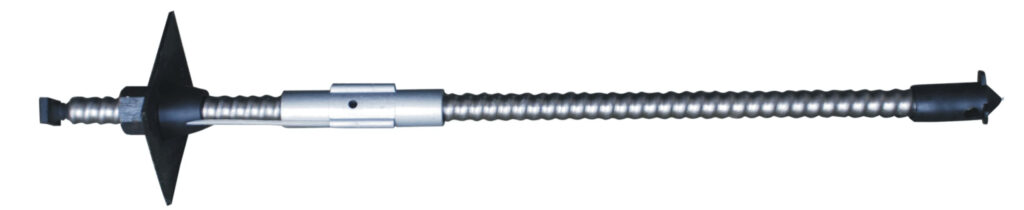
How Quality Control Applies to Different Anchoring Products
Different anchoring products have distinct manufacturing and inspection requirements. Quality checks should reflect the characteristics of the selected system.
Self-Drilling Hollow Anchor Bars
Hollow anchor bars for self-drilling consist of drilling and anchoring operations in a single mechanism. The factors of quality control that would be related to such products include size of the bars, threads, material composition, and drill bit and coupling compatibility.
It is also necessary to check that the product adheres to the specific design and installation standards of the system being used.
Hot-Dip Galvanized Anchor Bars
When it comes to galvanized bars, testing can be carried out on their dimensional consistency and coating requirements compliance. Testing must comply with relevant standards and project requirements. Storage and handling become important since damage to the protection layer influences the corrosion behavior.
Stainless Steel Anchor Bars
Stainless Steel Anchor Bars need confirmation of the type of alloy and material certification. Grades differ in terms of their qualities and corrosion resistance, and therefore it is necessary to verify the grade rather than assume it from the name of the product.
Prestressed Hollow Bolts
Pre-stressed hollow bolts need to consider the components and processes recommended for that specific purpose. Product sizes, mechanical properties, details of connection, and installation requirements are among other aspects to check during the quality planning process.
Pre-stressing activities and testing requirements should meet an approved engineering design and be conducted by competent staff members.
The Role of Quality Control During Installation
Manufacturing quality is just one aspect of system performance with regard to the anchoring system. Components may be manufactured within specifications but still fail to give desirable outcomes when improperly installed.
Before installation, the components must be checked for identification, dimensioning, visual status, and conformity with approved drawings. The components must be checked in case of any damage before use.
Anchor bolt installations shall be made according to certain drilling, grouting, connection, and loading procedures. Should it be required, on-site documentation and testing may be used as a way of verifying that the installation procedure meets the requirements of acceptance criteria for the project.
Proper communication between the contractor, engineer, and anchor bolt manufacturer can solve any queries related to the product. Nevertheless, installation and acceptance procedures must comply with engineering criteria.
Conclusion
Successful performance of ground anchoring can be assured by ensuring the right quality control at all levels, from the time of material procurement to transportation and installation of the components.
Collaborating with an anchor bolt manufacturer who is capable of establishing and recording the proper quality standards ensures that the standards are met and that no problems arise during the installation process. Quality control, along with proper engineering and installation, will lead to successful use of ground anchors.
0