


Table of Contents
In recent years, parents, educators, and retailers have increasingly discussed the differences between modern educational toys and traditional learning toys. Driven by advances in technology and child development research, toy designs now offer more interactive and skill-based learning experiences. At the same time, traditional toys remain popular for their simplicity, durability, and ability to encourage imagination without digital distractions. Understanding these differences helps families and businesses make better choices, especially when considering large-scale sourcing such as educational toy wholesale options for schools or learning programs. Both types of toys contribute to child development, but their value depends on how they are used and the learning goals they support.
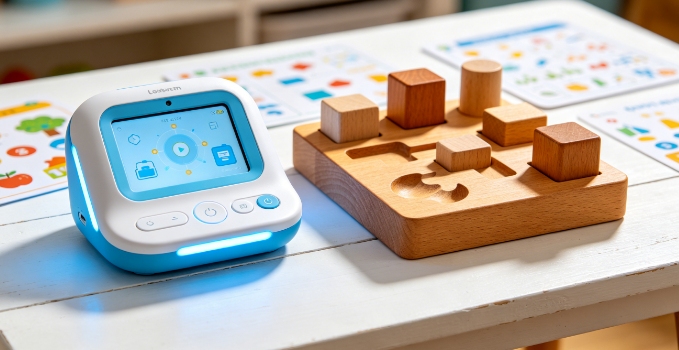
Modern Educational Toy Designs: Technology-Driven Learning Experience
Modern toys are designed with advanced features that combine entertainment and structured learning. They often integrate digital functions, sensors, and interactive systems to enhance engagement.
- Smart interaction features: Many modern toys respond to touch, voice, or movement, helping children understand cause-and-effect relationships in real time.
- STEM integration: Robotics kits, coding games, and electronic building sets introduce science and engineering concepts early, making abstract ideas easier to understand.
- Personalized learning paths: Some toys adapt difficulty levels based on a child’s performance, ensuring continuous challenge and improvement.
- Multimedia learning support: Visual and audio feedback systems improve memory retention and keep children engaged for longer periods.
These features make modern toys highly effective in structured learning environments, especially where guided educational outcomes are required.
Traditional Learning Toys: Simplicity and Imagination Development
Traditional toys remain highly valued because they encourage creativity without technological dependency. They are often simple in design but rich in developmental benefits.
- Open-ended play possibilities: Toys like wooden blocks or simple puzzles allow children to create unlimited scenarios using imagination alone.
- Strong focus on tactile learning: Physical manipulation of objects improves fine motor skills and sensory awareness.
- Screen-Free: Traditional toys reduce exposure to digital devices, helping to foster healthier play habits.
- Durability and long lifespan: Many traditional toys are made from wood or durable materials, allowing them to be used for years across different age groups.
Because of their simplicity, traditional toys often promote deeper imaginative thinking and emotional expression.
Learning Effectiveness Comparison: Which One Performs Better?
The effectiveness of modern versus traditional toys depends largely on the learning context and child development goals.
- Cognitive skill development: Modern toys often excel in structured learning, such as math, coding, or language recognition, while traditional toys enhance abstract thinking and creativity.
- Engagement level: Digital interaction in modern toys can increase short-term engagement, but traditional toys may encourage longer independent play sessions.
- Skill balance: Modern toys focus on technical and logical skills, whereas traditional toys strengthen creativity, storytelling, and social imagination.
- Learning flexibility: Traditional toys allow unrestricted exploration, while modern toys usually follow programmed learning paths.
Neither category is universally superior; instead, they complement each other in different developmental areas.
Market Demand and Industry Trends
The global toy industry continues to evolve, with both modern and traditional products maintaining strong demand in different segments.
- Growing demand for hybrid toys: Many manufacturers now combine physical play with digital elements to create balanced learning experiences.
- Expansion of global sourcing channels: Businesses exploring educational toy wholesale markets often seek diverse product lines that include both modern and traditional designs.
- Focus on educational value: Parents and schools increasingly prioritize toys that offer measurable learning outcomes rather than pure entertainment.
- Sustainability trends: Eco-friendly materials and recyclable designs are becoming important factors in purchasing decisions.
These trends indicate that the market is not shifting toward one type exclusively but rather integrating both approaches.
Conclusion
In conclusion, modern educational toys and traditional learning toys each offer unique advantages, and neither can fully replace the other. Modern designs provide structured, technology-enhanced learning experiences that prepare children for digital skills, while traditional toys nurture imagination, creativity, and sensory development. The most effective approach is to combine both types in a balanced learning environment, allowing children to benefit from diverse forms of play. For parents, educators, and businesses involved in sourcing through educational toy wholesale, understanding these differences is essential for selecting products that truly support well-rounded child development.
0