



Table of Contents
As modern education continues to evolve, parents and educators are placing greater emphasis on flexible learning tools that can adapt to children’s changing developmental needs. Instead of purchasing completely different products for every age group, many families and schools now prefer toys that remain useful across multiple stages of growth. This trend has increased interest in multifunctional learning products that combine entertainment, skill development, and long-term educational value. In the expanding market of educational toy supplies, manufacturers are increasingly designing products that can support children from toddler years through early primary education. These toys are not limited to a single learning purpose; rather, they evolve alongside the child’s cognitive, emotional, and physical development.
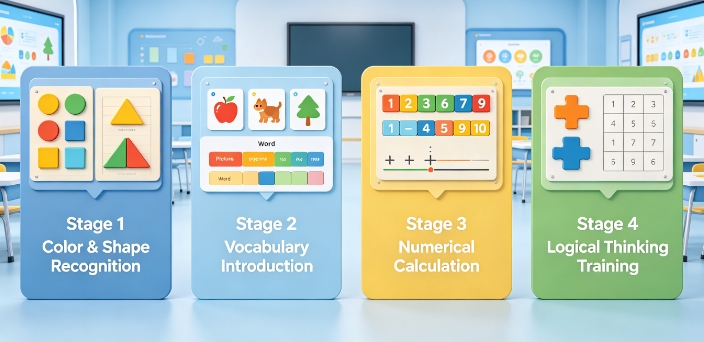
Why Multi-Stage Learning Toys Are Becoming Increasingly Popular
Modern parents are more focused on long-term educational investment than ever before. They seek products that offer lasting value while continuously supporting different developmental milestones.
Several factors contribute to this growing demand:
- Longer usability period
Toys that remain relevant for several years reduce the need for constant replacement. A child may begin with basic recognition activities and later use the same toy for more advanced learning tasks. - Cost-effectiveness for families and schools
Multifunctional products help parents and educational institutions save money while maintaining learning quality. This is especially important for daycare centers and preschools managing multiple age groups. - Consistent learning familiarity
Children often feel more comfortable using familiar tools. A toy that evolves with their abilities encourages confidence and smoother learning transitions. - Reduced product waste
Longer-lasting educational products support sustainability by lowering unnecessary consumption and disposal.
Because of these advantages, demand within the educational product industry continues to shift toward adaptable learning solutions.
How One Toy Can Support Different Developmental Stages
A well-designed educational toy can provide different forms of learning depending on the child’s age and developmental level. The same product may introduce simple concepts to younger children while offering more advanced challenges to older learners.
For example:
| Age Stage | Learning Focus | Possible Activities |
| 1–3 years | Sensory exploration | Color recognition, sound interaction, shape matching |
| 3–5 years | Vocabulary and logic | Word association, counting games, and simple problem-solving |
| 5–8 years | Advanced thinking | Memory challenges, reading practice, STEM-related activities |
This adaptability allows one product to remain educationally valuable over a long period. Many manufacturers of educational toy supplies now intentionally design modular systems or expandable content packs to support progressive learning.
Key Features That Make Multi-Stage Toys Effective
Not every educational toy can successfully support multiple learning stages. Certain design features determine whether a product can grow alongside the child.
Important characteristics include:
Adjustable Difficulty Levels
Some toys include different game modes or challenge settings that become more complex as children develop stronger skills.
Open-Ended Learning Possibilities
Toys that encourage imagination and creativity often remain useful longer because children can explore them in different ways over time.
Expandable Educational Content
Modern learning products may include additional cards, digital updates, or themed activity packs that introduce new knowledge gradually.
Durable and Safe Design
Products intended for long-term use must be strong enough to withstand repeated handling while remaining safe for different age groups.
These features greatly increase the long-term educational value of a learning product.
Benefits for Parents, Teachers, and Learning Environments
Multi-stage educational products offer practical advantages not only for children but also for adults responsible for guiding the learning process.
Some important benefits include:
- Parents can simplify the selection of toys by buying fewer items, but choosing higher-quality learning tools.
- Teachers can use the same product across multiple grade levels by adjusting their teaching methods.
- Children experience a smoother developmental progression because the learning format remains familiar.
- Educational spaces become more organized since fewer separate products are needed for different age groups.
The growing innovation within the educational toy supplies market reflects this demand for versatility and long-term usability in both home and classroom environments.
Conclusion
One educational toy can absolutely support multiple learning stages when it is thoughtfully designed with adaptability, progressive learning, and long-term engagement in mind. From early sensory exploration to advanced cognitive challenges, multifunctional toys help children continue learning as they grow. Their flexibility benefits not only children but also parents, teachers, and educational institutions seeking practical and sustainable learning solutions. As educational methods continue to emphasize personalized and lifelong learning, multi-stage toys are becoming an increasingly valuable part of modern childhood development and educational environments.
0