


Table of Contents
Concrete floors are widely used in industrial, commercial, and residential settings due to their strength and cost-effectiveness. However, despite being durable, concrete is naturally porous and prone to various forms of damage over time. Issues such as cracking, dusting, moisture penetration, and chemical staining are common in unprotected surfaces. To address these challenges, many owners have turned to protective coating systems. With support from professional floor coating suppliers, it becomes easier to identify solutions that resolve common concrete floor problems while improving long-term performance.
Cracking, Surface Erosion, and Structural Wear
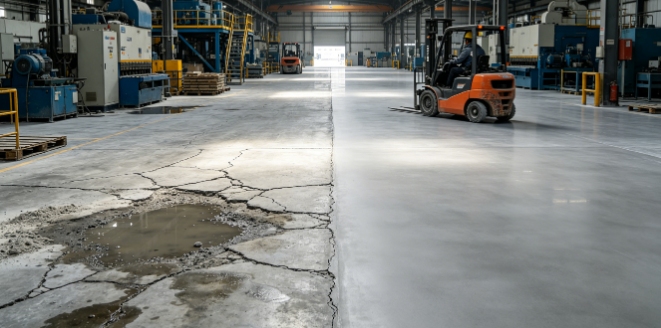
One of the most common problems in concrete floors is gradual surface deterioration caused by continuous use and environmental stress.
- Prevention of micro-cracks expanding: Coatings reduce surface stress caused by temperature changes and heavy loads, helping prevent small cracks from growing into larger structural issues.
- Abrasion resistance: Foot traffic, machinery movement, and equipment dragging can wear down untreated concrete, but coatings form a protective layer that reduces direct contact.
- Control of surface erosion: Over time, concrete naturally breaks down into dust and particles. Coatings stabilize the surface and reduce this erosion process.
- Improved load distribution: Coated surfaces help spread pressure more evenly, reducing localized damage caused by heavy equipment.
These benefits significantly reduce the need for frequent repairs and resurfacing.
Moisture Penetration and Water Damage
Moisture is one of the most damaging factors for concrete floors, especially in industrial or outdoor environments.
- Blocking water absorption: Coatings seal the porous structure of concrete, preventing water from seeping into the substrate.
- Reducing freeze-thaw damage: In colder environments, trapped moisture can freeze and expand, causing cracks. Coatings help eliminate this risk.
- Preventing mold and mildew formation: Moist environments can lead to biological growth in unsealed concrete, which coatings help control.
- Protecting reinforcement materials: By limiting moisture entry, coatings also reduce the risk of corrosion in steel reinforcement inside concrete.
This protection is essential for long-term floor stability and durability.
Chemical Stains and Surface Contamination
In many environments, concrete floors are exposed to chemicals that can cause permanent damage if not protected.
- Resistance to oil and fuel spills: Automotive workshops and industrial facilities often deal with oil leakage, which can permanently stain uncoated floors.
- Protection from acids and solvents: Harsh chemicals can react with concrete and weaken its structure, but coatings act as a protective barrier.
- Prevention of deep staining: Without protection, liquids can penetrate deeply into concrete, making cleaning impossible.
- Improved hygiene control: In food processing or laboratory environments, coatings help maintain clean, non-porous surfaces.
These features make coated floors much easier to maintain and restore.
Dusting, Maintenance Difficulties, and Cleaning Issues
Unsealed concrete often creates operational challenges related to cleanliness and maintenance efficiency.
- Reduction of dust generation: Coatings lock surface particles in place, preventing the release of fine dust that can affect air quality and machinery performance.
- Simplified cleaning process: Smooth coated surfaces allow for quick sweeping and mopping without deep scrubbing.
- Lower maintenance frequency: Because the surface is protected, fewer repairs and deep cleaning cycles are required.
- Reduced cleaning costs: Less need for specialized cleaning agents or equipment lowers operational expenses.
This improves both hygiene and long-term maintenance efficiency.
Surface Safety and Operational Efficiency Problems
Concrete floors without proper treatment can also create safety risks and reduce workplace efficiency.
- Slip hazards in wet conditions: Coatings can include anti-slip textures that improve traction and reduce accident risks.
- Uneven surface issues: Cracks and wear can create trip hazards, while coatings help maintain a smooth and uniform surface.
- Poor visibility in work areas: Coatings can be customized with light colors or markings to improve visibility and organization.
- Workflow inefficiency: Well-coated floors support smoother movement of equipment and materials in industrial environments.
These improvements contribute to safer and more efficient operations.
Conclusion
Concrete floors face a wide range of problems, including cracking, moisture damage, chemical exposure, dusting, and safety hazards. Floor coating systems provide an effective solution by addressing all these issues through surface protection, sealing, and reinforcement. They not only improve durability but also enhance safety, hygiene, and maintenance efficiency. By working with experienced floor coating suppliers, property owners can select the right system for their specific environment and ensure long-term floor performance, stability, and cost savings.
0