

Table of Contents
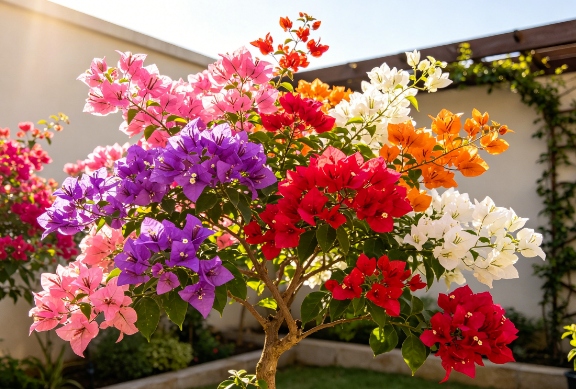
The multicolor bougainvillea is famous for its stunning mix of bright shades, often displaying pink, purple, red, orange, and white tones on the same plant. However, maintaining these vibrant colors is not always automatic. Many gardeners notice that their plant produces more leaves than flowers or that the bracts lose intensity over time. The key to keeping a multicolor bougainvillea visually striking lies in understanding how environmental conditions, plant care routines, and stress levels influence its flowering behavior. Unlike many ornamental plants, bougainvillea actually thrives when slightly stressed, meaning that factors such as sunlight, watering, pruning, and nutrition must be carefully balanced. Provided that appropriate care strategies are adopted, continuous blooming can be promoted, maintaining rich and vibrant colors throughout the entire growing season.
Sunlight Exposure and Its Role in Color Intensity
Sunlight is the most important factor affecting the color vibrancy of a multicolor bougainvillea. Without enough direct light, the plant may grow well but produce weak or faded blooms.
- Minimum sunlight requirement: The plant needs at least 5–6 hours of direct sunlight daily. Less light often results in fewer bracts and dull colors.
- Color enhancement through strong light: Intense sunlight helps activate pigmentation in the bracts, making colors appear deeper and more saturated.
- Best placement strategy: South-facing or west-facing areas are ideal because they provide consistent sunlight exposure throughout the day.
- Avoid excessive shade: Shaded environments encourage leafy growth instead of flowering, reducing the visual impact of the plant.
Proper sunlight exposure ensures that the multicolor bougainvillea maintains its natural brightness and produces strong, colorful floral displays.
Watering Habits That Influence Flower Vibrancy
Water management plays a critical role in maintaining both plant health and color intensity. Overwatering is one of the most common mistakes that reduces blooming performance in a multicolored bougainvillea.
- Controlled water stress: Slight dryness encourages flowering, while too much water leads to excessive leaf growth instead of colorful bracts.
- Deep but spaced watering: Water thoroughly and then allow the soil to dry before the next irrigation cycle to promote stronger root development.
- Season-based adjustments: Reduce watering during cooler months and slightly increase it during hot summer periods.
- Drainage importance: Ensure pots or soil beds allow excess water to escape quickly to prevent root damage and fading blooms.
Maintaining a balanced watering routine helps the multicolored bougainvillea focus its energy on producing vibrant, long-lasting colors instead of unnecessary foliage.
Fertilization and Nutrient Balance for Strong Colors
Feeding the plant correctly is essential for sustaining the vivid tones of a multicolored bougainvillea, but excessive or incorrect fertilization can reduce flowering quality.
Key fertilization practices include:
- Use low-nitrogen fertilizers
High nitrogen levels promote leaf growth but reduce flower production, which can weaken color display. - Increase phosphorus and potassium intake
These nutrients support blooming strength and enhance bract pigmentation, making colors appear more intense. - Apply fertilizer during active growth seasons
Spring and early summer are the best periods for feeding, when the plant is actively producing new flowers. - Avoid overfeeding
Too much fertilizer can lead to salt buildup in soil, which negatively affects root health and flower vibrancy.
When properly nourished, a multicolored bougainvillea produces consistent flowering cycles with richer and more eye-catching colors.
Pruning and Stress Management for Better Blooming
Pruning is not only for shaping the plant but also for stimulating flowering and maintaining color intensity in a multicolor bougainvillea.
- Encourage new growth: Light pruning after flowering cycles promotes fresh shoots, which are more likely to produce colorful bracts.
- Remove weak branches: Cutting back old or unproductive stems redirects energy toward healthier, blooming parts of the plant.
- Controlled stress response: Bougainvillea naturally responds to mild stress by increasing flower production, which enhances color visibility.
- Maintain airflow: Proper pruning improves air circulation, reducing disease risk that can dull flower appearance.
Strategic pruning ensures that the multicolor bougainvillea stays compact, healthy, and continuously productive in terms of flowering.
Environmental Factors and Long-Term Color Maintenance
Beyond daily care routines, long-term environmental conditions also play a major role in maintaining vibrant colors in a multicolored bougainvillea.
- Temperature stability: Warm climates support better flowering, while sudden cold exposure can reduce color intensity.
- Soil quality maintenance: Well-drained, slightly sandy soil keeps roots healthy and supports consistent nutrient absorption.
- Air circulation benefits: Good airflow reduces humidity-related issues that may weaken blooms or cause discoloration.
- Seasonal adaptation: Adjusting care routines based on seasonal changes ensures stable flowering performance year-round.
By controlling these environmental factors, gardeners can maintain a consistently healthy and visually striking multicolored bougainvillea throughout different seasons.
Conclusion
Maintaining vibrant colors in a multicolor bougainvillea requires a balanced combination of sunlight exposure, controlled watering, proper fertilization, strategic pruning, and stable environmental conditions. Unlike many ornamental plants, bougainvillea responds positively to slight stress, meaning that overcare—especially overwatering or overfeeding—can actually reduce its visual impact. When grown under optimal conditions with enough sunlight and proper maintenance, the plant rewards gardeners with continuous bursts of vivid, multi-colored blooms. By understanding its natural growth behavior and adjusting care practices accordingly, you can ensure that your multicolor bougainvillea remains bright, healthy, and visually stunning throughout the year.
0