

Table of Contents
In the food and beverage industry, food safety is not only a fundamental requirement but also a key factor that directly affects consumer health, brand reputation, and long-term business success. As global food safety regulations become increasingly strict, manufacturers are paying more attention to the hygiene, reliability, and compliance of production equipment. As a core piece of packaging equipment, the bottle filling and capping machine plays a critical role in filling, sealing, and protecting products from contamination. A well-designed bottle filling and capping machine helps ensure consistent product quality, prevents external contamination, and enables manufacturers to meet international food safety standards.
1. Food-Grade Material Selection
To ensure food safety from the very beginning, manufacturers use materials that comply with food industry regulations when producing a bottle filling and capping machine. The machine frame and all parts that come into direct contact with the product typically use food-grade stainless steel, such as SUS304 or SUS316. These materials offer excellent corrosion resistance and chemical stability, ensuring they do not react with liquids such as water, juice, dairy products, or acidic beverages during long-term operation.
- Corrosion- and acid-resistant for long-term food contact: Food-grade stainless steel maintains stable performance even in humid environments and during frequent cleaning cycles.
- Smooth surface to prevent bacterial growth: Polished stainless steel surfaces minimize product residue and reduce the risk of bacterial and microorganism buildup.
- Easy to clean and sanitize, compliant with GMP and HACCP standards: These materials can withstand high-temperature water, steam, and various cleaning agents, making them suitable for strict sanitation procedures.
In addition, filling valves, pipelines, seals, hoses, and tanks are all made from certified food-contact materials, ensuring the entire bottle filling and capping machine consistently meets food safety requirements.
2. Hygienic Structural Design
Beyond material selection, structural design plays a decisive role in maintaining hygiene. Modern bottle filling and capping machines are designed with hygienic principles to minimize contamination risks.
- Simple pipeline layout to prevent liquid residue: Internal piping is designed to reduce dead ends and sharp angles, allowing liquids to drain completely and preventing product buildup.
- Quick-disassembly structure for easy cleaning and maintenance: Key components can be easily removed and reinstalled, enabling thorough cleaning while minimizing downtime.
- Support for CIP (Clean-in-Place) and SIP (Sterilize-in-Place) systems: Automated cleaning and sterilization processes allow the machine to be sanitized without disassembly, ensuring consistent hygiene between production cycles.
This hygienic design not only improves cleaning efficiency but also helps manufacturers meet strict food safety regulations and high-volume production demands.
3. Accurate Filling and Reliable Sealing Control
Product consistency and packaging integrity play a crucial role in ensuring food safety. A high-quality bottle filling and capping machine uses advanced control technologies to achieve precise filling and secure sealing.
- Accurate filling to avoid overfilling or underfilling: Depending on the product type, the machine can use flow meters, level control, or weighing systems to ensure consistent fill volumes.
- Stable capping torque to ensure proper sealing: Adjustable and monitored torque control prevents loose caps or excessive tightening that could damage bottles.
- Prevention of leakage and external contamination: Reliable sealing protects products from air, moisture, and microorganisms during storage and transportation.
By maintaining accurate filling and consistent sealing, the bottle filling and capping machine helps extend product shelf life and ensures consumer safety.
4. Automation and Reduced Human Contact
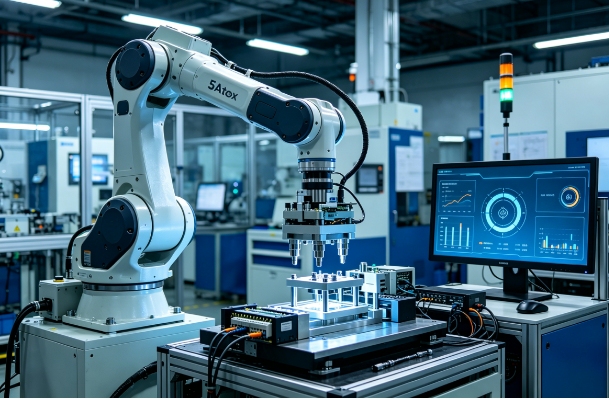
Human contact is one of the main sources of potential contamination in food production. Increasing automation significantly improves food safety. Modern bottle filling and capping machines integrate multiple automated functions.
- Automatic bottle feeding, filling, capping, and discharge: Continuous, automated operation minimizes manual handling and reduces contamination risks.
- PLC and touchscreen control systems: User-friendly interfaces allow precise parameter setting and real-time monitoring of the production process.
- Sensors for real-time production monitoring: The machine can detect missing bottles, misalignment, filling errors, or improper capping and trigger alarms or automatic shutdowns.
High automation not only improves hygiene but also increases production efficiency and product consistency.
5. Compliance with International Food Safety Certifications
To meet the requirements of different markets, manufacturers design and produce bottle filling and capping machines in accordance with international food safety standards.
- CE certification: Ensures the machine meets European safety, mechanical, and electrical standards.
- FDA food-contact material compliance: Confirms that all materials in contact with food meet U.S. food safety regulations.
- ISO 22000 / HACCP food safety management systems: Validates the machine’s role in systematic food safety risk control and quality management.
These certifications demonstrate the safety, reliability, and global applicability of the bottle filling and capping machine, helping manufacturers expand into international markets.
Conclusion
In summary, a high-quality bottle filling and capping machine is far more than a simple packaging device. Through the use of food-grade materials, hygienic structural design, accurate filling and sealing control, and high-level automation. Compliance with international food safety certifications fully meets modern food safety standards. For food and beverage manufacturers, therefore, investing in a reliable bottle filling and capping machine is not only a regulatory necessity. It is also a long-term commitment to product quality, brand reputation, and consumer health.
0