



Table of Contents
As digital transformation accelerates across industries, next-generation fiber infrastructure must support higher bandwidth, lower latency, and greater scalability than ever before. Data centers, cloud platforms, and enterprise networks are rapidly evolving toward high-density architectures that demand efficient and reliable cabling solutions. In this context, the 24F MTP trunk cable has become a widely discussed option due to its structured design, high fiber capacity, and plug-and-play functionality. But is it truly the right choice for future-ready fiber infrastructure? Evaluating its performance, scalability, deployment efficiency, and long-term value helps answer this question.
Meeting the Demands of High-Density Network Architecture
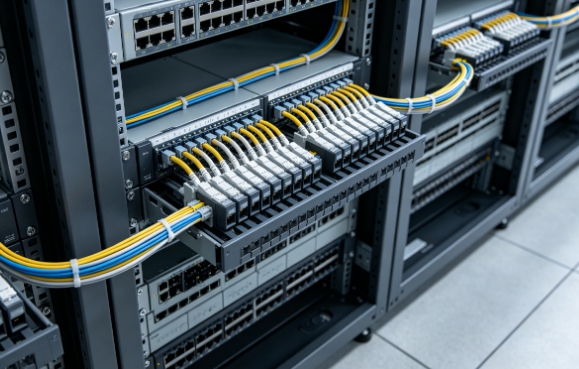
Next-generation fiber infrastructure requires solutions that can handle massive data traffic within limited physical space. The 24F MTP trunk cable is designed specifically for high-density environments, making it highly suitable for modern network architectures.
- It consolidates 24 fibers into a single compact assembly, significantly reducing cable volume in racks and pathways
- Its structured design improves physical organization, allowing cleaner and more efficient cabling layouts
- High-density capability supports advanced applications such as 40G, 100G, and emerging higher-speed networks
These features make it an effective solution for environments where space efficiency and performance must work together.
Enhancing Deployment Efficiency with Pre-Terminated Design
One of the key advantages of the 24F MTP trunk cable is its pre-terminated, plug-and-play structure, which greatly simplifies installation in complex network environments.
- Factory-terminated connectors eliminate the need for on-site fiber splicing, reducing installation complexity and dependency on specialized labor
- Standardized MTP/MPO interfaces allow quick and consistent connections between equipment, patch panels, and distribution modules
- Pre-tested cable assemblies reduce post-installation troubleshooting, ensuring faster system activation and higher reliability
This streamlined deployment process is especially valuable in large-scale projects where time and accuracy are critical.
Supporting Scalability for Future Infrastructure Growth
Scalability is a core requirement for next-generation fiber systems, as network demands continue to increase rapidly. The 24F MTP trunk cable provides a flexible foundation for long-term expansion.
For example:
- Additional trunk cables can be added without disrupting existing infrastructure or requiring major redesign
- Modular compatibility with patch panels and high-density enclosures enables incremental capacity upgrades
- The 24-fiber structure supports phased expansion strategies based on real-time business needs
This adaptability allows organizations to scale their infrastructure efficiently while controlling long-term investment costs.
Improving Operational Efficiency and Maintenance Management
In modern fiber networks, long-term maintenance efficiency is just as important as initial deployment. The 24F MTP trunk cable helps improve operational performance by simplifying cable organization and troubleshooting processes.
- Structured fiber grouping reduces complexity when tracing connections during maintenance or upgrades
- Cleaner rack environments minimize accidental cable disturbance and improve system stability
- Faster fault identification shortens downtime in mission-critical environments such as data centers and enterprise networks
These benefits contribute to more stable operations and reduced maintenance overhead over time.
Delivering Cost Efficiency and Long-Term Value
While next-generation infrastructure often requires higher initial investment, the 24F MTP trunk cable provides strong long-term cost advantages through efficiency and scalability.
- Reduced installation time lowers labor costs in large-scale deployment projects
- Improved cable management decreases ongoing operational and maintenance expenses
- High-density design reduces the need for additional physical infrastructure, optimizing space utilization
Over the lifecycle of the network, these advantages translate into a lower total cost of ownership and improved return on investment.
Conclusion
The 24F MTP trunk cable is a strong candidate for next-generation fiber infrastructure due to its high-density design, efficient deployment process, scalability, and long-term operational benefits. It addresses key challenges in modern network environments, including space limitations, installation complexity, and future expansion requirements. For organizations building or upgrading high-performance fiber systems, it offers a reliable, efficient, and future-ready cabling solution.
0